
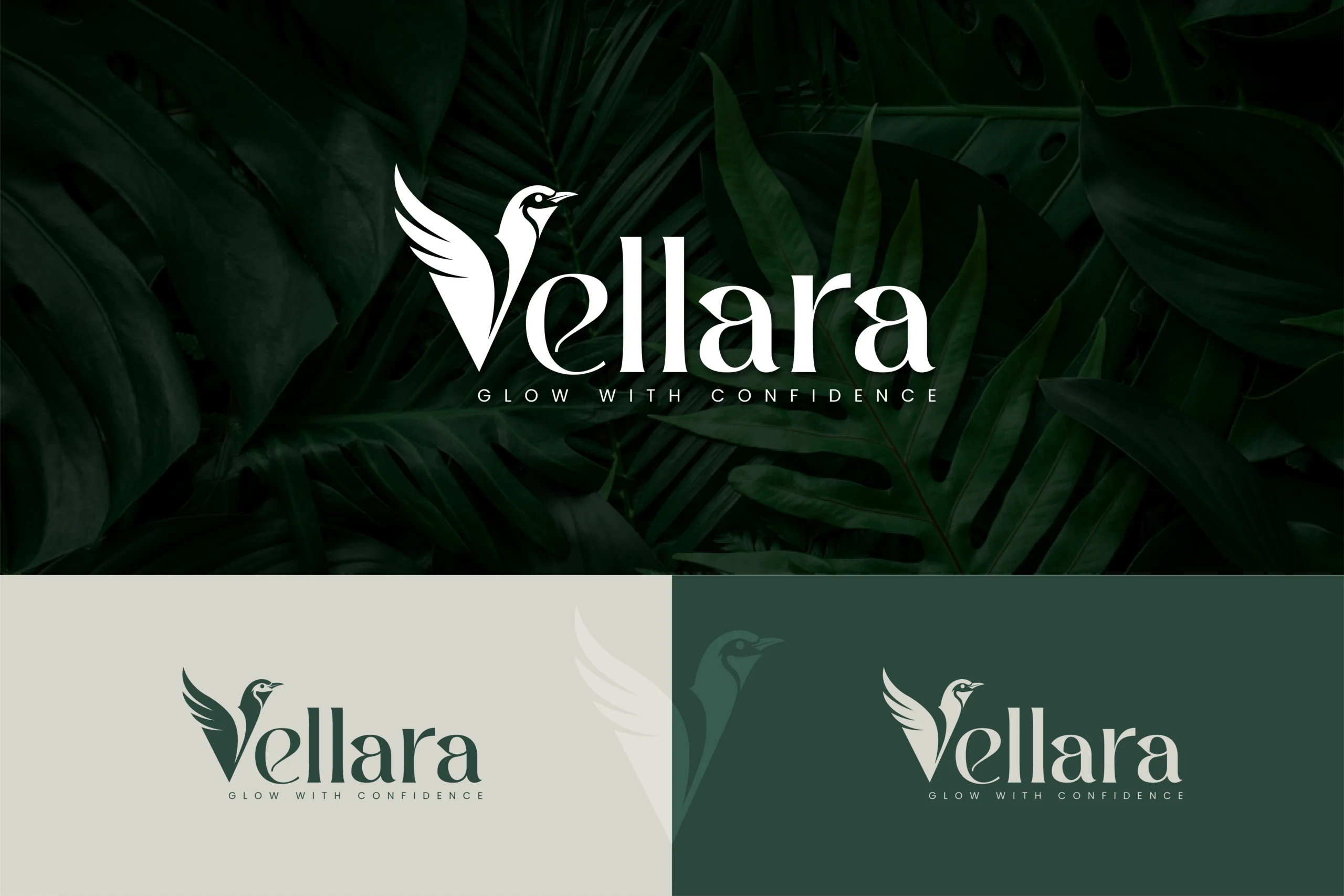
Most business owners don’t realize their logo is hurting them — until they watch a competitor’s brand get remembered while theirs gets ignored. A logo isn’t decoration. It’s the first thing your market decides to trust or dismiss, and that decision happens faster than any sales pitch can recover from.
No sign-up required to browse · 100% satisfaction guarantee
What “Professional” Actually Means in Logo Design
The word “professional” gets used so loosely in design that it’s almost lost its meaning. Every freelancer claims it. Every template site promises it. But a truly professional logo design is defined by a specific set of outcomes — not just how polished it looks on a white background.
A professional logo:
- Works at every size — from a 32px browser favicon to a full-size billboard
- Communicates clearly without color — if it falls apart in black and white, it isn’t finished
- Is delivered in the right file formats — vector source files, not just a JPEG
- Is built for your specific industry and audience — not adapted from a generic template
- Holds up over time — built on design principles that don’t expire with trends
If your current logo doesn’t clear all five of these, it’s not doing its full job — regardless of how much you paid for it.
The Real Cost of an Unprofessional Logo
There’s a version of this story that plays out in almost every industry. A business launches with a logo that was quick, cheap, or self-made. The brand grows. The marketing starts. Then someone notices that the logo looks off on the printed banner, or the file can’t be resized without going blurry, or a new team member points out that it looks eerily similar to a competitor’s mark.
Now there’s a rebrand conversation — which costs far more than getting it right the first time.
The hidden costs of a weak logo include:
- Reprint costs — when the logo doesn’t scale correctly for physical materials
- Inconsistent brand presence — when different team members use different versions because there’s no proper file system
- Lost first impressions — every pitch deck, proposal, and social post carrying a weak mark is quietly eroding trust
- Redesign fees — paying twice for what should have been done once
A professional logo design is not an expense. It’s the foundation every other marketing investment builds on.
The Logo Design Process: What Good Designers Actually Do
Understanding the logo design process helps you evaluate designers before you hire — and helps you brief them more effectively when you do.
Here’s what a structured, professional process looks like:
1. Discovery and Brand Brief The designer asks about your business, your target audience, your competitors, and the feeling you want your brand to evoke. This is not small talk — it’s the research phase. Designers who skip this deliver generic results.
2. Concept Development Multiple initial directions are explored — different marks, different typographic approaches, different visual metaphors. Good designers show their thinking, not just their conclusions.
3. First Presentation The designer presents 2–3 distinct concepts with rationale for each. At this stage, you’re choosing a direction — not approving a final logo.
4. Refinement The chosen direction is developed further. Colors, typography, spacing, and proportions are refined through revision rounds until the mark is exactly right.
5. Final Delivery The completed logo is packaged in all necessary file formats — AI, EPS, SVG, PDF, PNG (transparent), JPG — along with any brand guidelines or usage notes.
Designers who compress or skip steps in this process always show it in the final result. When you work with a specialist like Noorain — rated 4.9 across 1,358 reviews with a 1-hour average response time — this process is built into how they work, not something you have to fight for.
Choosing the Right Logo Style for Your Brand
Professional logo design is not one-size-fits-all. The style that works for a luxury real estate firm is not the style that works for a streetwear label, even if both want to appear “premium.”
Here are the most common logo styles and what they communicate:
- Minimalist / Wordmark — Clean, confident, and modern. Works exceptionally well for service businesses, tech companies, and personal brands. Scales perfectly across digital platforms.
- Lettermark (Monogram) — Two or three initials crafted into a single mark. Strong for established brands or businesses with long names. Requires precise typographic skill to execute well.
- Icon + Wordmark — A symbol paired with the business name. The most versatile format — the icon can stand alone as a social media avatar or app icon while the full version is used in formal contexts.
- Emblem / Badge — A logo contained within a shape (circle, shield, crest). Communicates heritage, authority, and craftsmanship. Common in food, beverage, education, and sports industries.
- Vintage / Retro / Hand-drawn — Communicates authenticity, craft, and character. Works powerfully for artisan brands, creative businesses, and lifestyle companies.
The right style choice is not about personal preference — it’s about what your specific audience responds to, and what your competitive landscape calls for.
What Files You Should Receive After Every Logo Project
This is where most budget logo experiences fall short — and where professional logo design earns its cost immediately.
After a completed logo project, you should receive:
- AI file — the original Adobe Illustrator source file; editable and infinitely scalable
- EPS file — universal vector format usable by any designer or print shop
- SVG file — web-optimized vector for digital platforms and icon use
- PDF file — print-ready vector format
- PNG (transparent background) — for placement over any color or image
- JPG — for general digital use where transparency isn’t needed
- White version — for use on dark backgrounds
- Black version — for single-color printing
Noorain’s Standard ($45) and Premium ($75) packages include all of these — plus a Social Media Kit and unlimited revisions. The Premium tier also adds stationery designs, making it a complete brand launch package.
If a designer delivers only a JPG or PNG without vector source files, the project is not complete.
Understanding Logo Design Packages: What Each Tier Actually Gets You
Choosing between a Basic, Standard, and Premium logo package is a real decision with real downstream consequences. Here’s how to think about it:
Basic Package (~$20)
- One logo concept
- JPG and PNG files
- Limited revisions (5)
- Best for: testing a designer’s style before committing to a larger project, or very early-stage businesses with minimal immediate branding needs
Standard Package (~$45)
- 2 logo concepts
- Full file formats including source files
- Social Media Kit included
- Unlimited revisions
- Best for: most businesses launching or rebranding — this is the practical choice for anyone who needs to use their logo across multiple platforms immediately
Premium Package (~$75)
- 3 logo concepts
- Full file formats
- Social Media Kit + Stationery designs
- Unlimited revisions
- Best for: businesses launching a full brand identity at once, or any situation where the logo needs to immediately roll out across business cards, letterheads, and branded materials
For most businesses, the Standard package is the practical sweet spot — it delivers everything needed for a complete digital brand presence without overpaying for stationery if you don’t need it yet.
How to Write a Logo Brief That Gets Strong Results
The quality of a logo is directly proportional to the quality of the brief behind it. Vague inputs produce generic outputs — regardless of the designer’s skill level.
A strong logo brief includes:
- Your business name — exactly as it should appear in the logo
- What you do — in one clear sentence, not a paragraph
- Your target audience — be specific: “women 30–45 interested in wellness” is more useful than “everyone”
- 3–5 adjectives that describe your brand personality — e.g., bold, approachable, minimal, luxurious, technical
- Color preferences or restrictions — if you have existing brand colors, provide the HEX codes
- Logo style direction — minimalist, vintage, icon-based, typography-focused
- Competitor logos you want to stand apart from — visual references are worth more than descriptions
- Logos you admire — even from unrelated industries; this communicates visual taste instantly
The more specific your brief, the faster the process moves — and the fewer revision rounds you’ll need to get to a result you love.
Red Flags to Watch for When Hiring a Logo Designer
With thousands of designers available at every price point, knowing what to avoid is as useful as knowing what to look for.
Watch out for:
- Portfolios that all look the same — a designer with no range has no real design thinking, only a template
- No questions before starting — a designer who begins work without understanding your brand is guessing
- Delivery in raster formats only — if there’s no vector file, there’s no professional logo
- Identical concepts — presenting three versions of the same idea is not three concepts
- No rationale for design choices — professionals explain why they made decisions; template-fillers don’t
The reviews tell you more than the portfolio in many cases. Look for patterns in feedback — not just star ratings. A reviewer who mentions “communication,” “revisions handled professionally,” and “delivered in perfect formats” is describing a real working relationship. That’s more valuable than a polished portfolio sample with no context.
Why Minimalist Logo Design Outperforms in Modern Branding
The trend toward minimalist logo design is not aesthetic fashion — it’s a response to how brands actually live in the world today.
A minimalist logo:
- Loads faster on websites and digital platforms
- Scales cleanly from app icon to billboard without losing impact
- Reproduces accurately in embroidery, engraving, and single-color print
- Ages better — stripped of trend-specific details, it remains relevant longer
- Communicates confidence — restraint in design signals that a brand knows exactly what it is
This is why the most enduring brand marks in the world — across every industry — trend toward simplicity. Complexity communicates noise. Simplicity communicates clarity.
The Difference Between a Logo and a Brand Identity
A logo is a mark. A brand identity is a system.
Understanding this distinction helps you know what to ask for — and when a logo alone isn’t enough.
A complete brand identity includes:
- The primary logo
- Secondary and simplified logo versions
- Brand color palette (with HEX, RGB, and CMYK codes)
- Typography system (primary and secondary fonts)
- Icon or symbol mark (for small-size placements)
- Social media profile assets
- Business card and stationery designs
- Brand usage guidelines
Some businesses need only a strong logo to start. Others — particularly those launching with a full marketing stack — benefit from having the complete system in place from day one. Noorain’s Premium package delivers the foundational elements of that system: logo, source files, social media kit, and stationery in a single order.
Your logo is the one brand asset that shows up everywhere, every time.
It’s on every email, every invoice, every social post, every ad, every handshake. Getting it right isn’t perfectionism — it’s the most efficient branding investment you’ll make.
Work with a designer who asks the right questions, delivers the right files, and builds something that still looks sharp five years from now. The brief takes twenty minutes. The result lasts the life of your brand.